
Class 6 Worksheet on Present Perfect Continuous

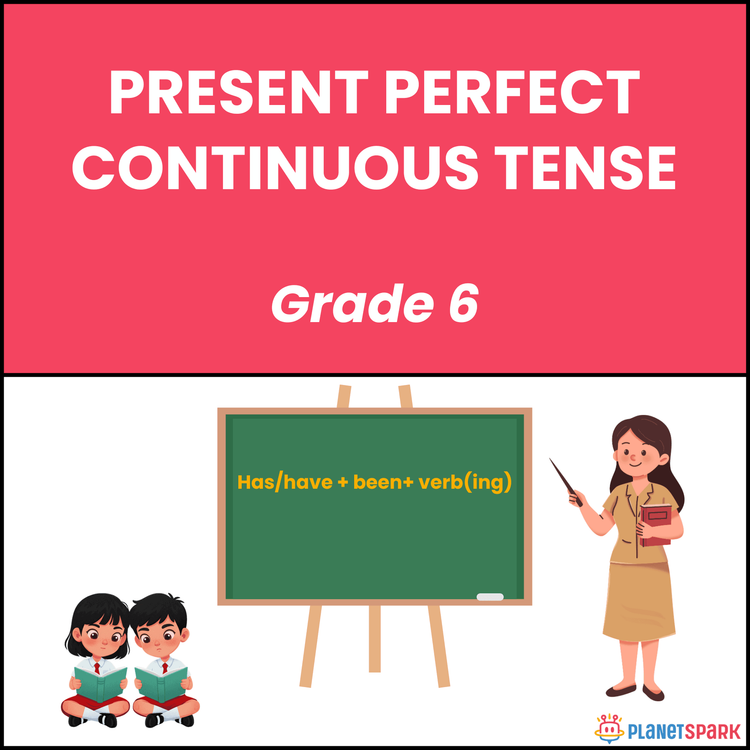
Class 6 Worksheet on Present Perfect Continuous
Mastering Ongoing Actions: Present Perfect Continuous Tense for Grade 6
This Grade 6 worksheet is designed to help students master the Present Perfect Continuous Tense, a vital grammar tool for describing actions that started in the past and are still continuing. Through a variety of engaging exercises including multiple-choice questions, true/false identification, sentence rewriting, and paragraph completion, learners will develop a strong grasp of how to use "has been" and "have been" with the present participle (-ing) form of verbs. This comprehensive resource builds a solid foundation for more advanced writing and communication by focusing on duration and continuity.
Why Present Perfect Continuous Tense Matters in Grammar?
The Present Perfect Continuous Tense is essential for providing context about the duration of an activity. For Grade 6 learners, this topic is important because:
1. It explains actions that started in the past and continue into the present moment.
2. It highlights the duration of an activity using time markers like "for" and "since".
3. It helps students distinguish between completed actions and those that are ongoing.
4. It improves the flow and detail of narrative writing and daily conversation.
What’s Inside This Worksheet?
This worksheet includes five grammar-rich activities that build fluency with the Present Perfect Continuous Tense:
Exercise 1 – Multiple Choice Questions
Students select the grammatically correct sentence structure for the Present Perfect Continuous Tense from two options. This reinforces the correct use of auxiliary verbs "has been" and "have been".
Exercise 2 – True and False
Learners evaluate whether specific sentences use the tense correctly. This exercise helps identify common errors, such as subject-verb disagreement or missing the "been" component.
Exercise 3 – Fill in the Blanks
Students conjugate base verbs (e.g., play, work, study) into the Present Perfect Continuous form to complete sentences with time durations.
Exercise 4 – Sentence Rewriting
Students are challenged to transform simple present sentences into the Present Perfect Continuous Tense. This builds flexibility in shifting between different time frames in English.
Exercise 5 – Paragraph Completion
A story-based exercise where students fill in the blanks within a narrative to maintain consistent and correct tense usage.
Answer Key (For Parents & Educators)
Exercise 1 – Multiple Choice Questions
1. a) She has been playing cricket for two hours.
2. b) They have been studying all day.
3. b) Ravi has been reading for an hour.
4. a) We have been waiting for you since morning.
5. b) She has been eating lunch since 1 PM.
6. b) I have been working on this project all week.
7. a) They have been playing football for two hours.
8. a) He has been practicing the piano for years.
9. b) I have been learning French for six months.
10. a) They have been studying for the test since morning.
Exercise 2 – True and False
1. T 2. F 3. F 4. T 5. T
6. F 7. T 8. F 9. F 10. T
Exercise 3 – Fill in the Blanks
1. have been playing 2. has been working
3. have been studying 4. has been waiting
5. have been practicing 6. have been learning
7. have been waiting 8. has been running
9. have been eating 10. has been dancing
Exercise 4 – Sentence Rewriting
1. He has been playing football.
2. They have been studying for their exams.
3. She has been waiting for the bus.
4. They have been playing cricket.
5. We have been working on this project.
6. She has been eating lunch.
7. He has been practicing the piano.
8. They have been walking to school.
9. We have been studying for our exams.
10. They have been playing cricket.
Exercise 5 – Paragraph Completion
Sarah has been working at the bakery for years before she decided to open her own café. By the time I visited her, she has been working there for over 10 years. She has been dreaming of starting her own business since she was a child. In fact, she has been talking about it constantly before she took the leap. When we met for coffee, she has been sharing all her experiences. She has been making a lot of mistakes early on, but they have been teaching her a lot. The staff has been busy in the kitchen when I arrived, as they have been preparing for the lunch rush. Sarah has been running the business on her own for a while, but now she has a team to help.
Empower your child to express themselves clearly and fluently with our expert-led English grammar sessions.
Frequently Asked Questions
The present perfect continuous tense describes an ongoing action that started in the past and continues into the present.
Form negatives by adding "not" after "have/has," like "She has not been studying."
Confusing it with the present perfect tense or using it for completed actions.